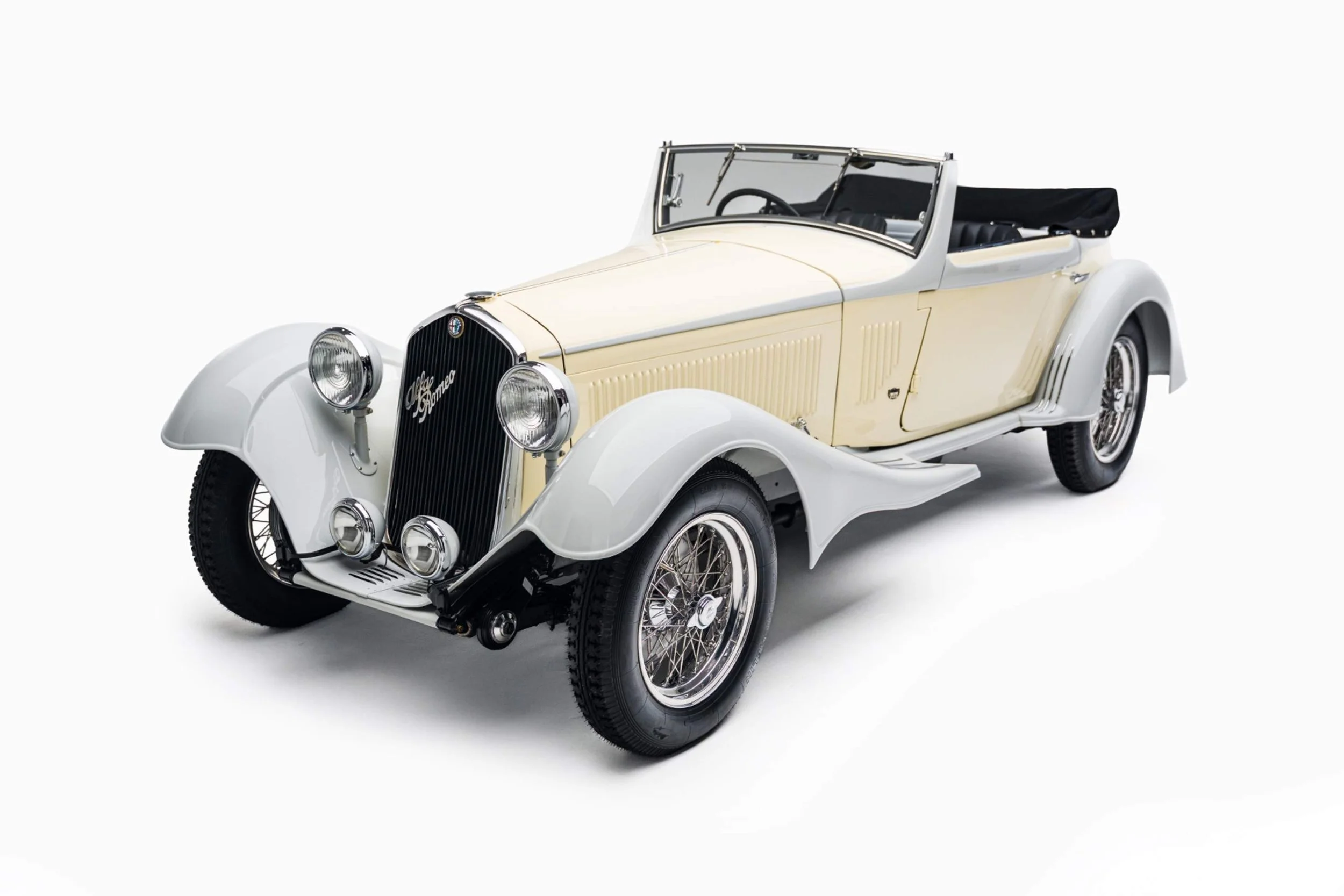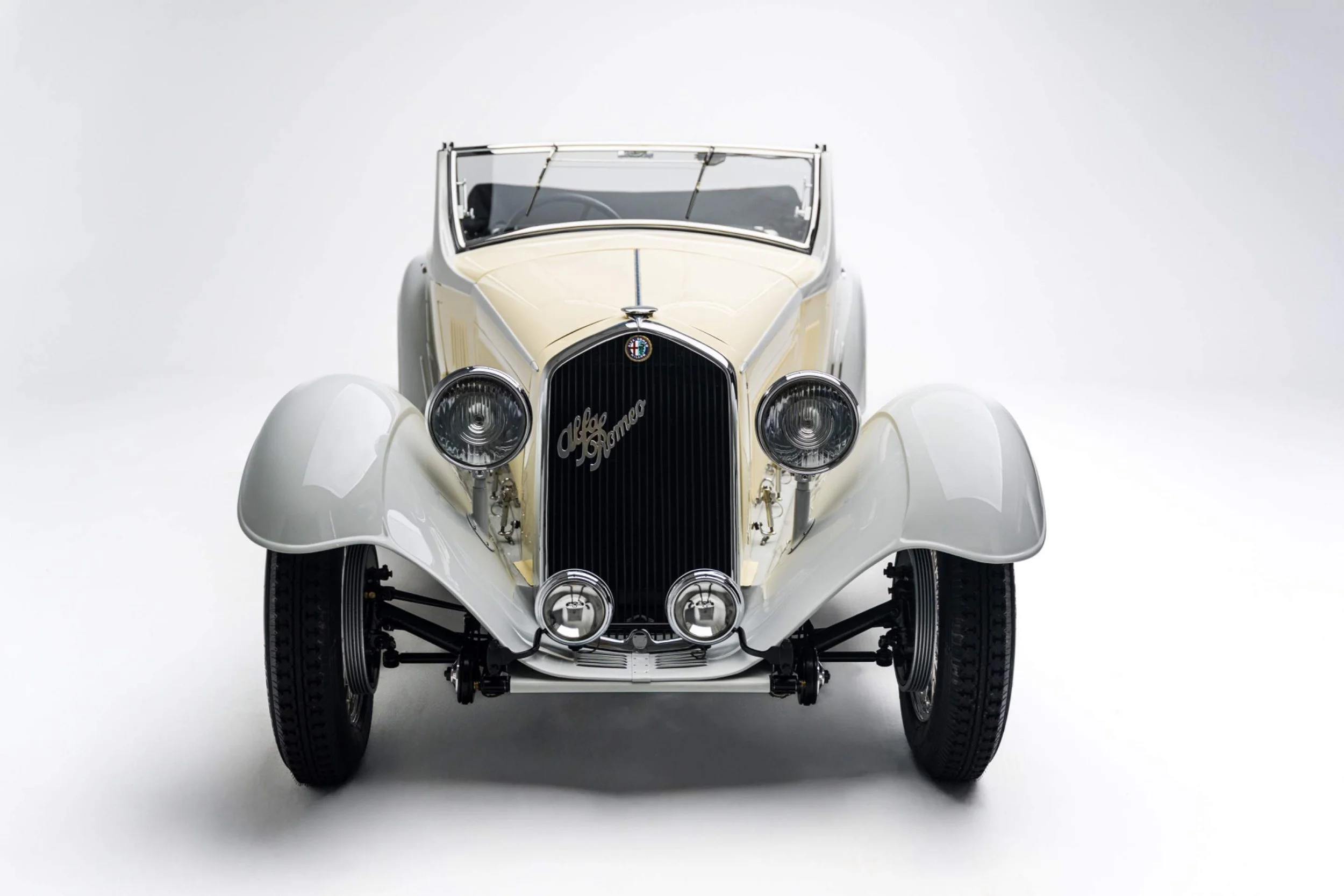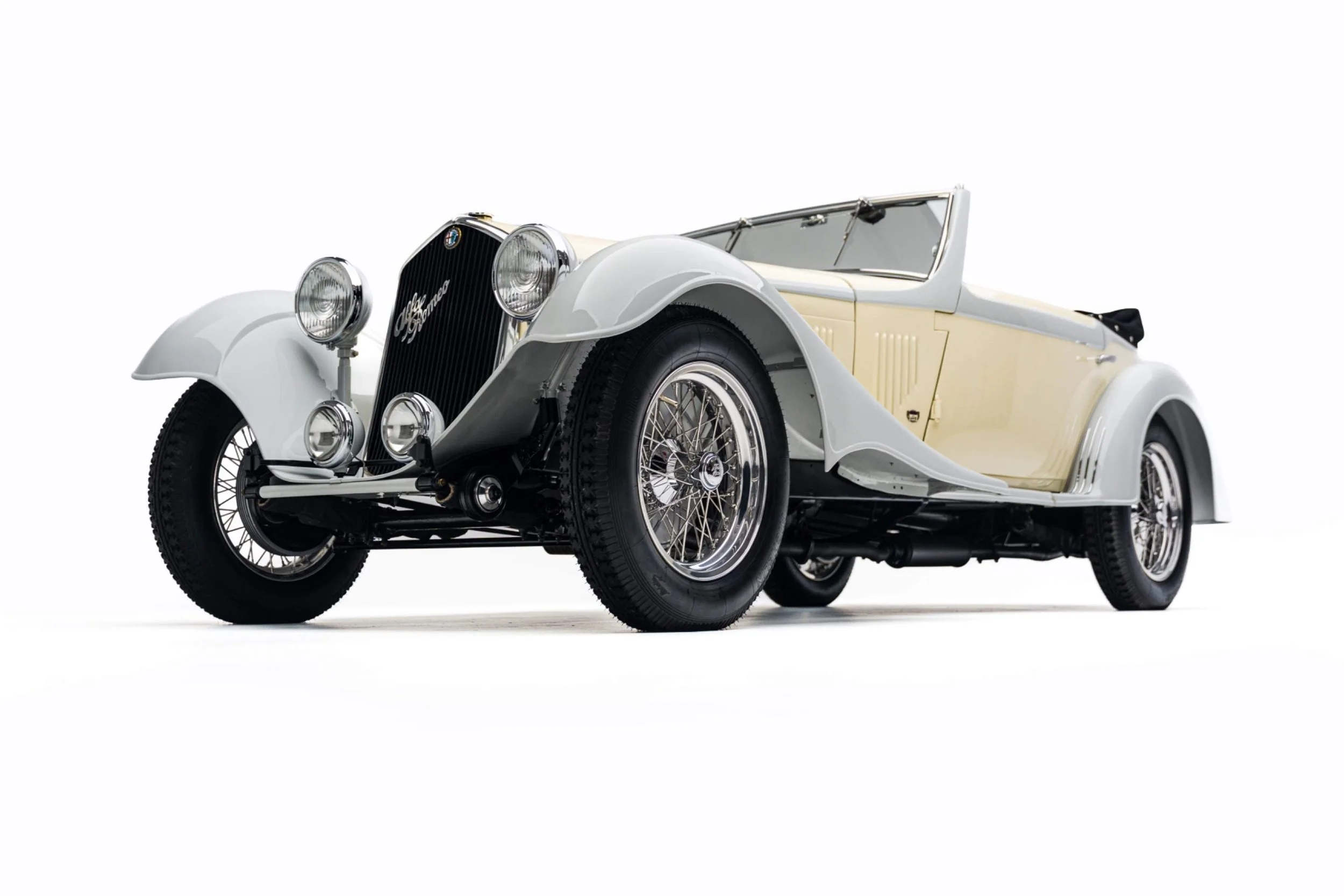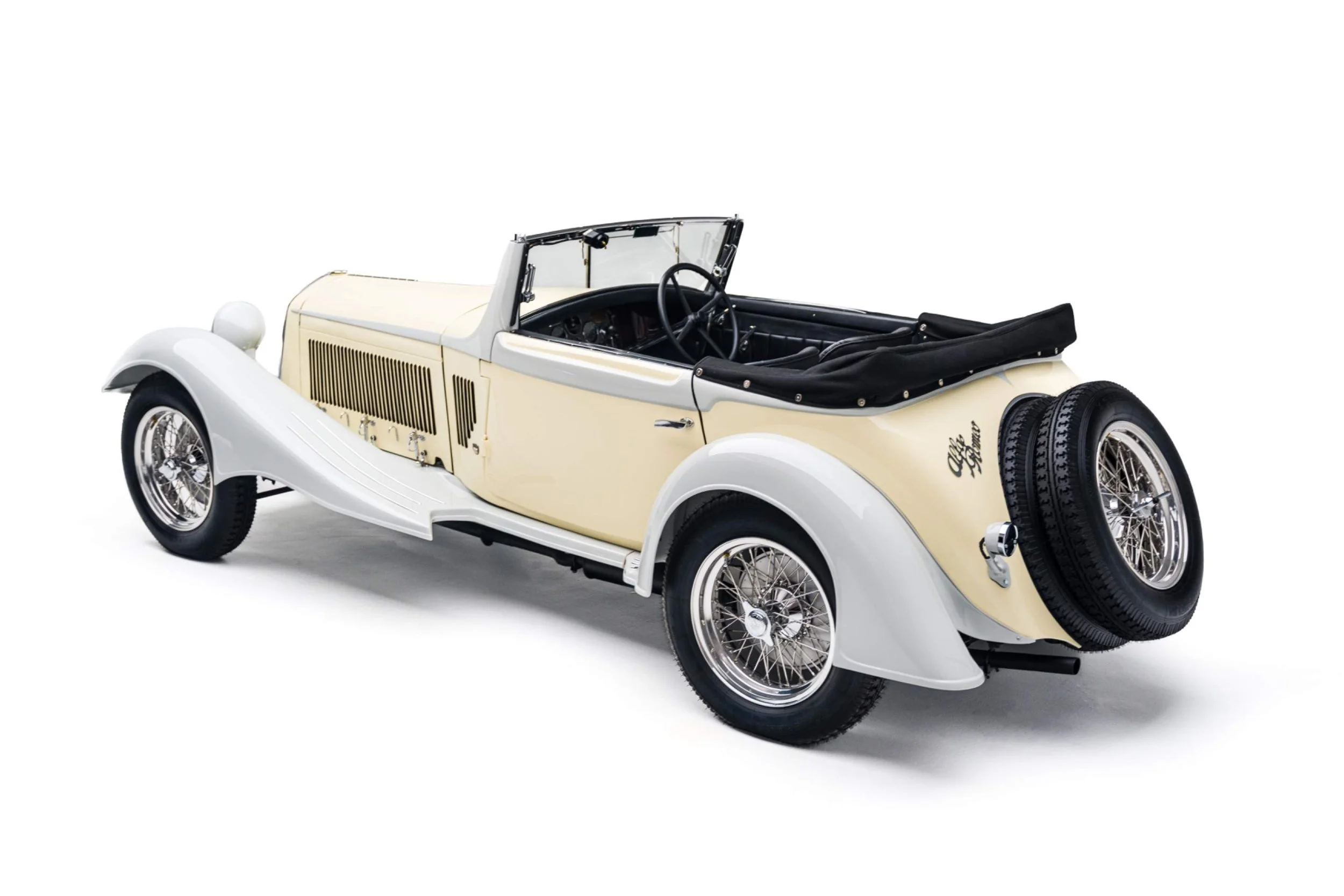
1933 Alfa Romeo 6C 1750 Gran Sport Cabriolet
Chassis no. 121215037 · Engine no. 121215037
• Sixth-series supercharged Gran Sport, the final and most developed of Jano's 1750s
• Matching-numbers chassis and engine, confirmed on inspection by Bonhams
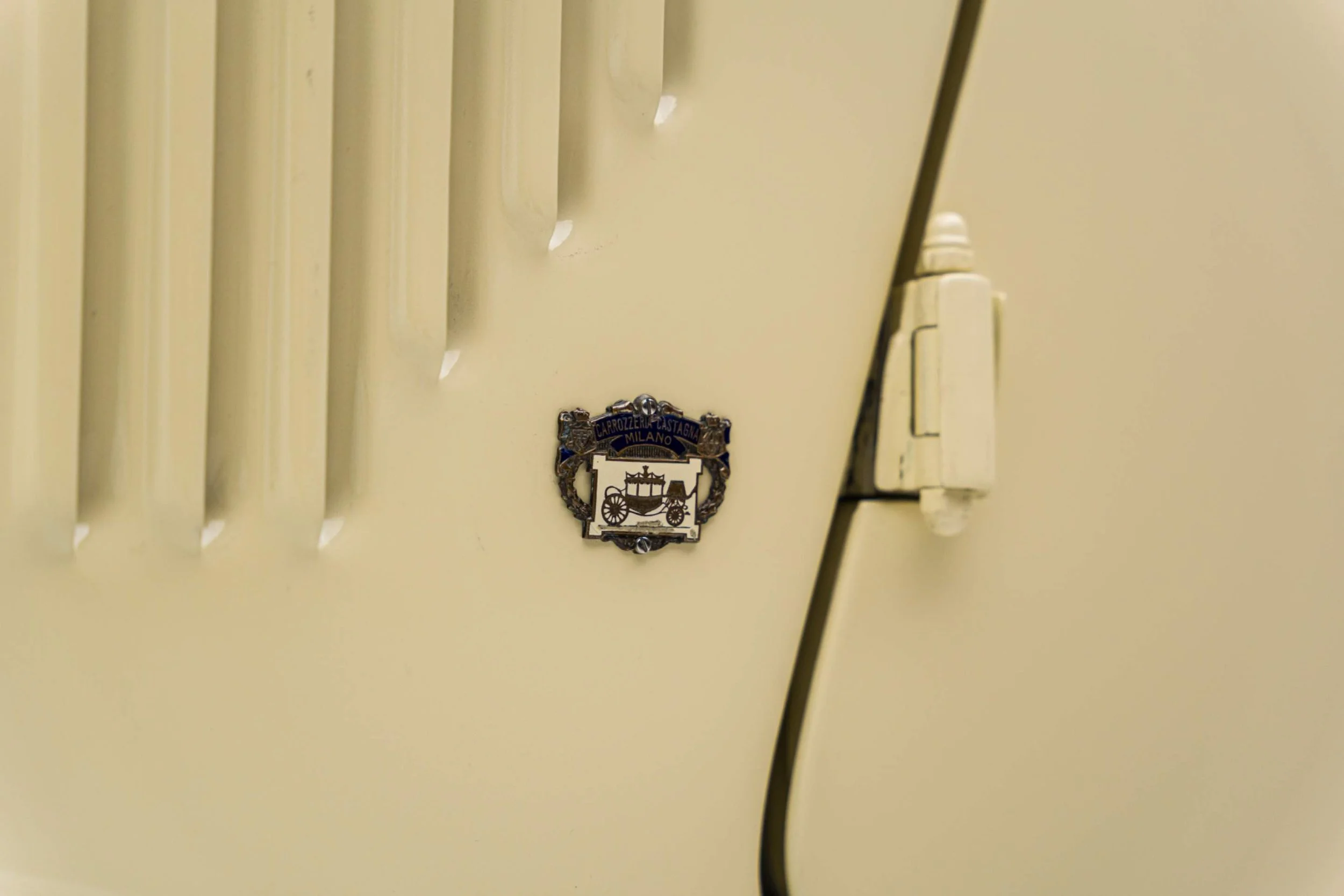
• One of a small number of cabriolets by Carrozzeria Castagna of Milan on the Gran Sport chassis
• Documented history from 1934, including 27 years with Major R.C.K. Money and the Targa Tasmania campaigns of pioneering Australian racer Diana Gaze
• Cosmetically restored by Carrozzeria Touring in Milan in 2010 and again in 2025 by CCI Restoration; accompanied by its original Castagna fenders
• A natural Mille Miglia candidate — comfortable, reasonably weathertight and a high-coefficient model — and a compelling value next to the Zagato-bodied Gran Sports
Specifications: 85 bhp, 1,752 cc DOHC inline six-cylinder engine with Roots-type supercharger and single Memini carburetor, four-speed manual transmission, semi-elliptic leaf-spring suspension, four-wheel drum brakes. Wheelbase: 2,745 mm (108 in.). Right-hand drive.
Vittorio Jano's 6C 1750 is the car that made Alfa Romeo's reputation on the road: a jewel of a twin-cam six in a light, beautifully balanced chassis, built in six series from 1929 to 1933 and victorious at the Mille Miglia in 1929 and 1930 — the latter the race in which Nuvolari ran down Varzi in the dark with his headlamps off. The supercharged Gran Sport sat at the top of the range, with a Roots blower on the nose of the crankshaft, a single Memini carburetor and a shortened 2,745 mm wheelbase, and the sixth series of 1933 was its final, most refined form. Most Gran Sports wore Zagato's minimal spider body; a handful went to the great Milanese houses for coachwork that turned the racing chassis into a grand touring car.
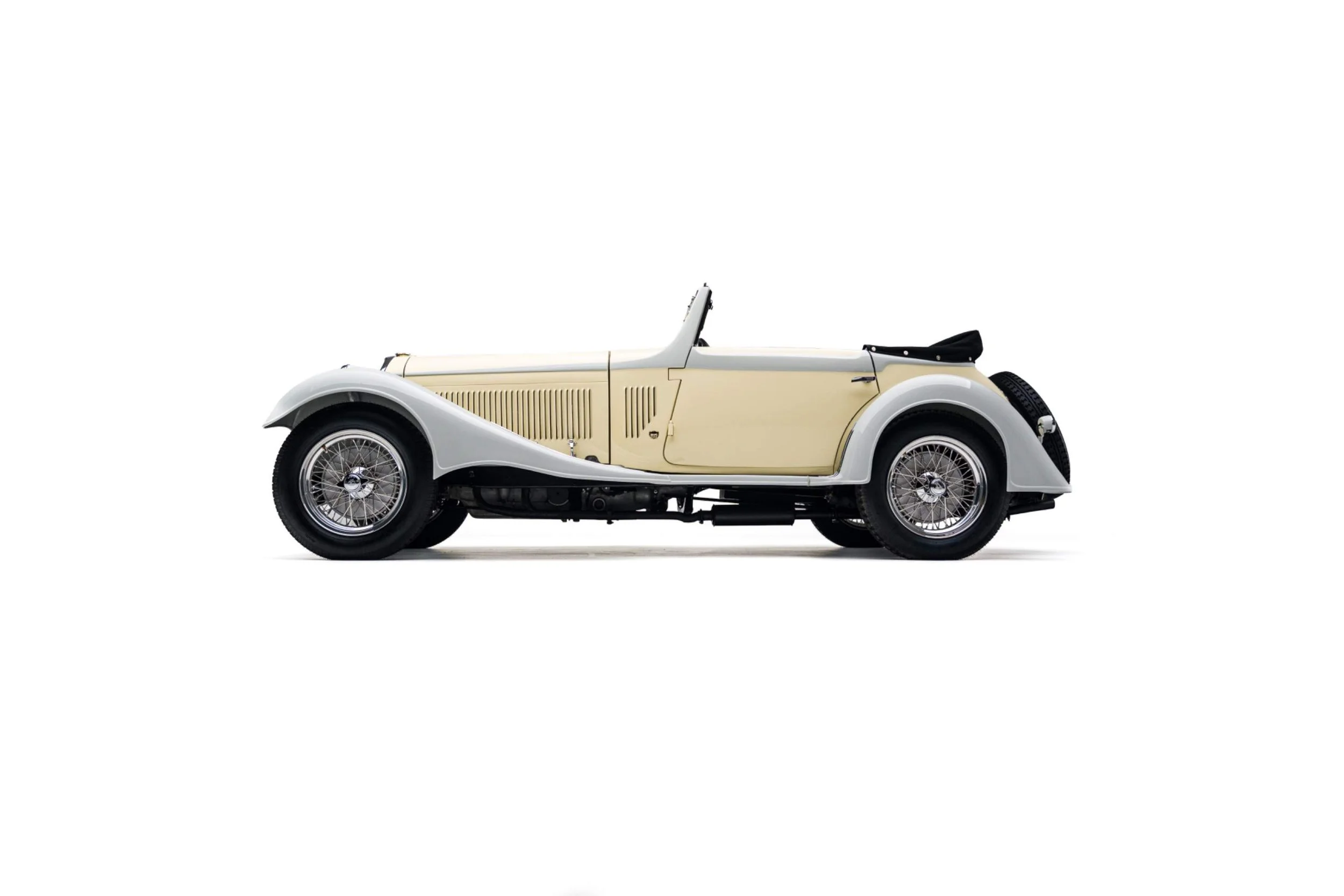
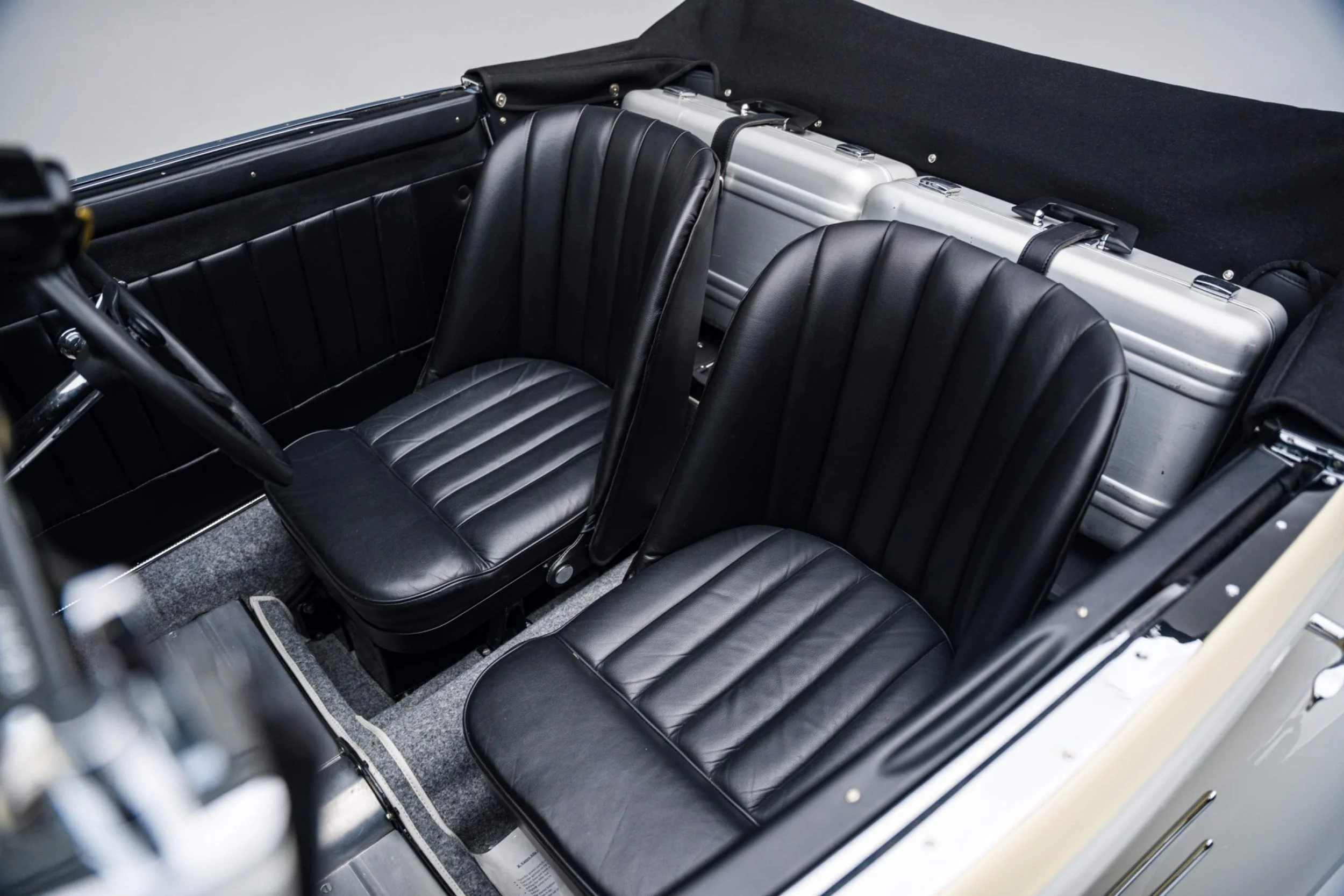
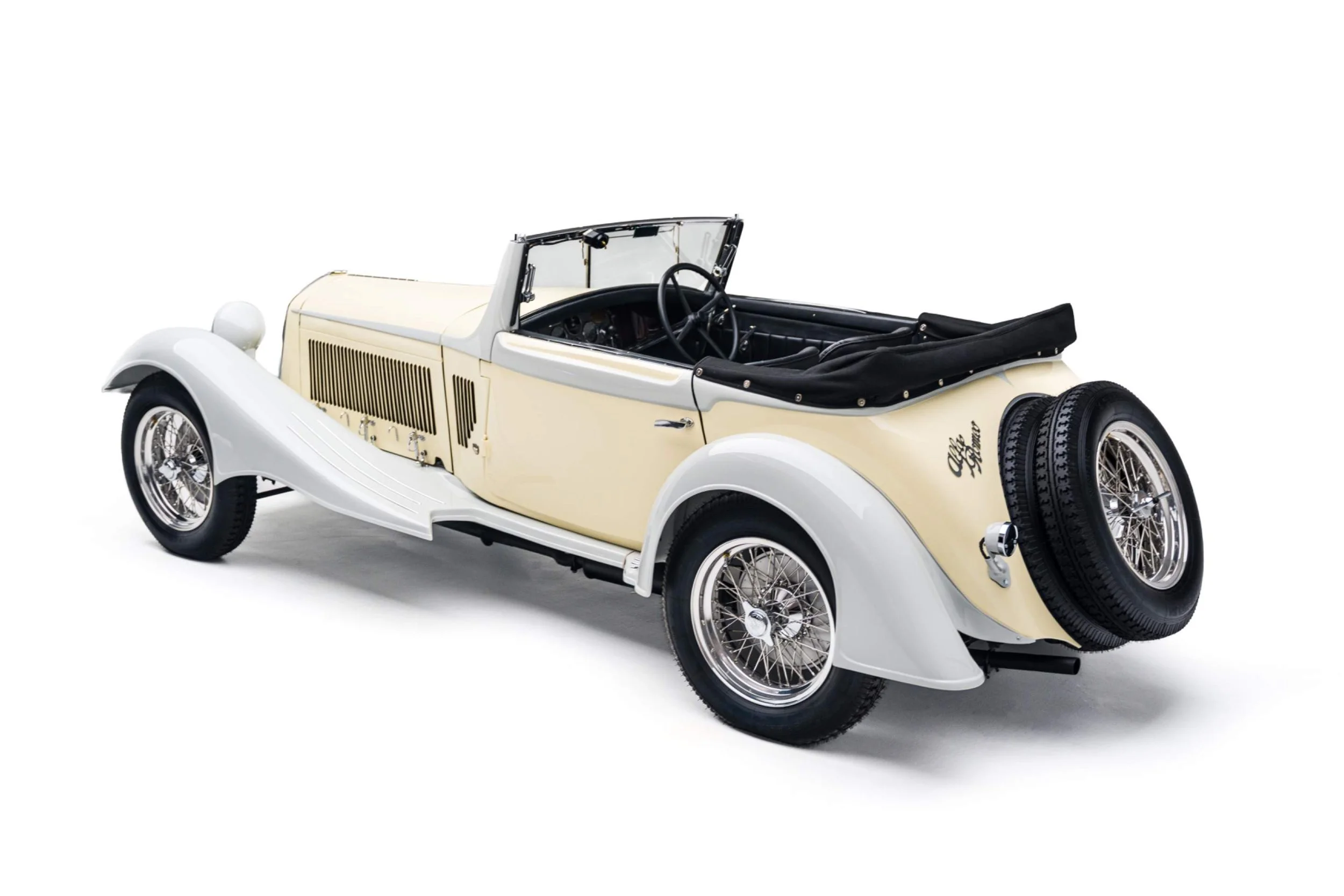
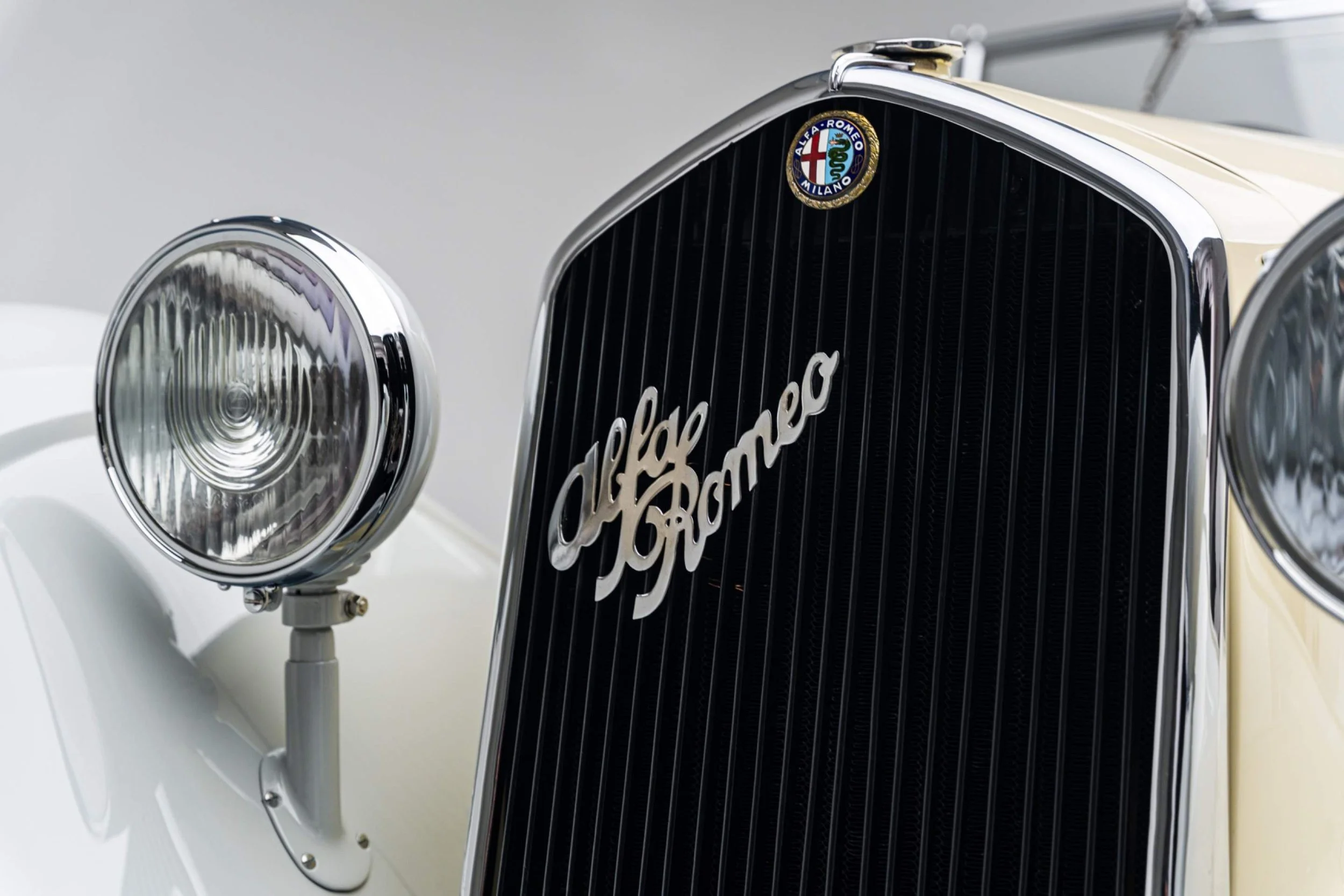
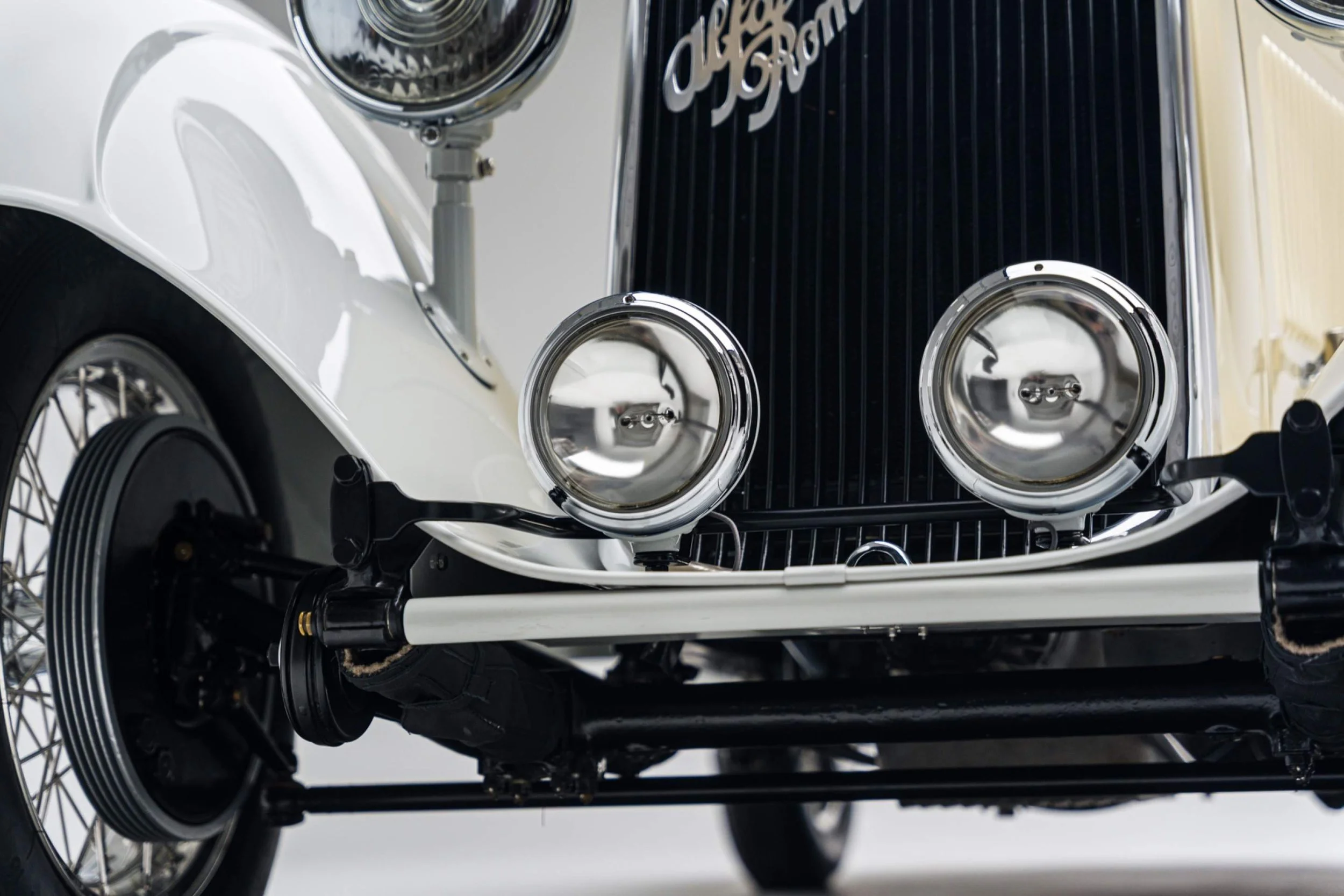
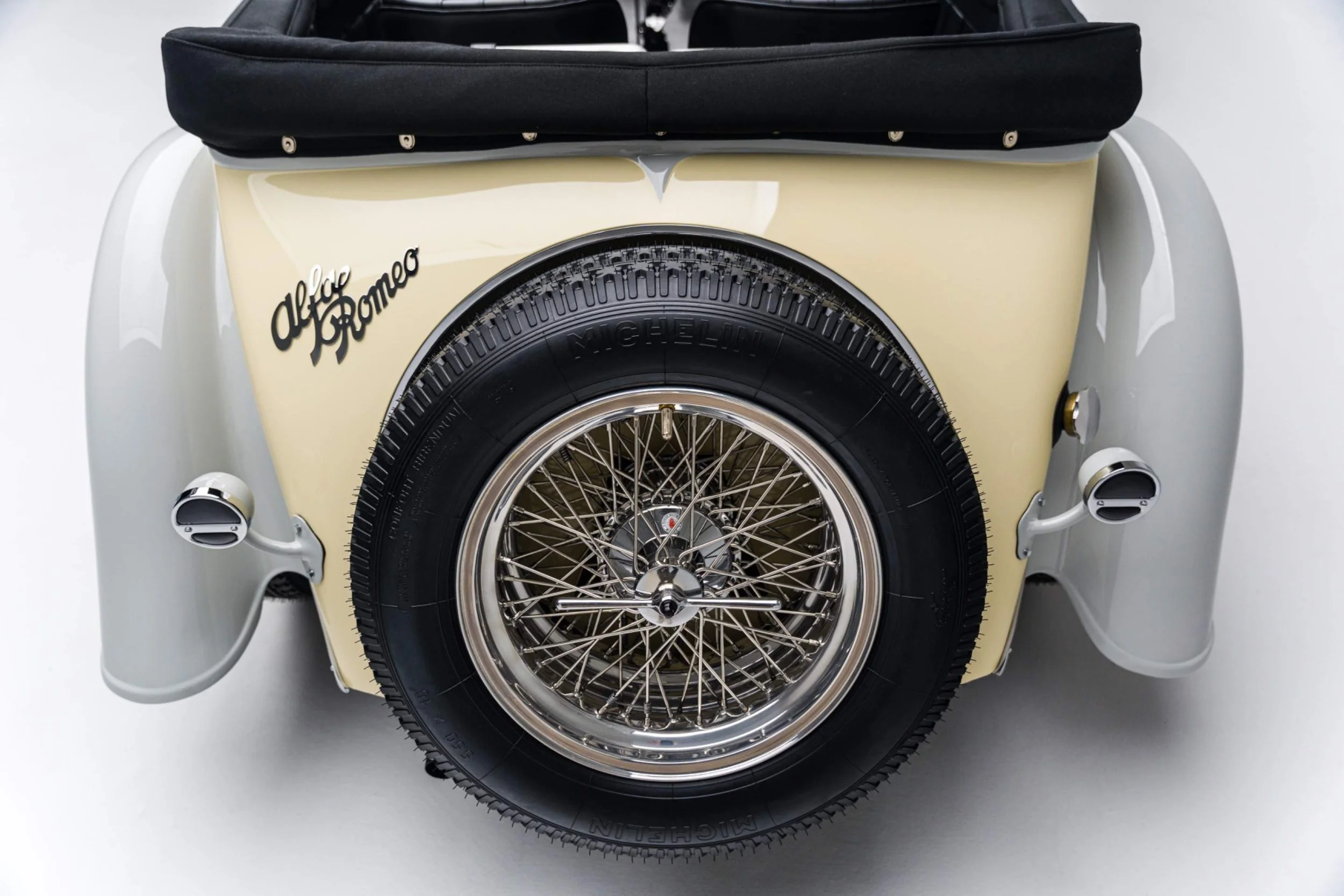
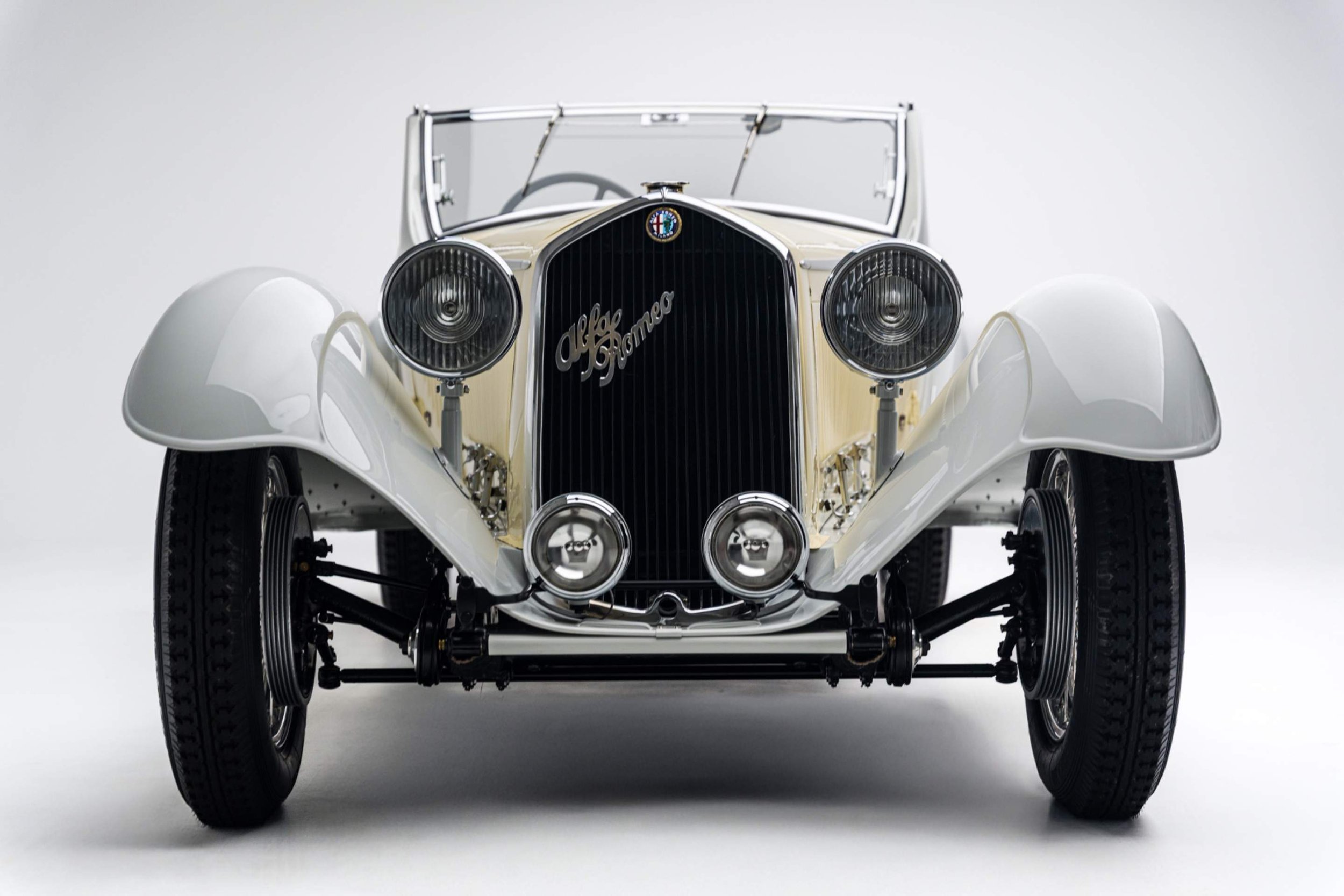
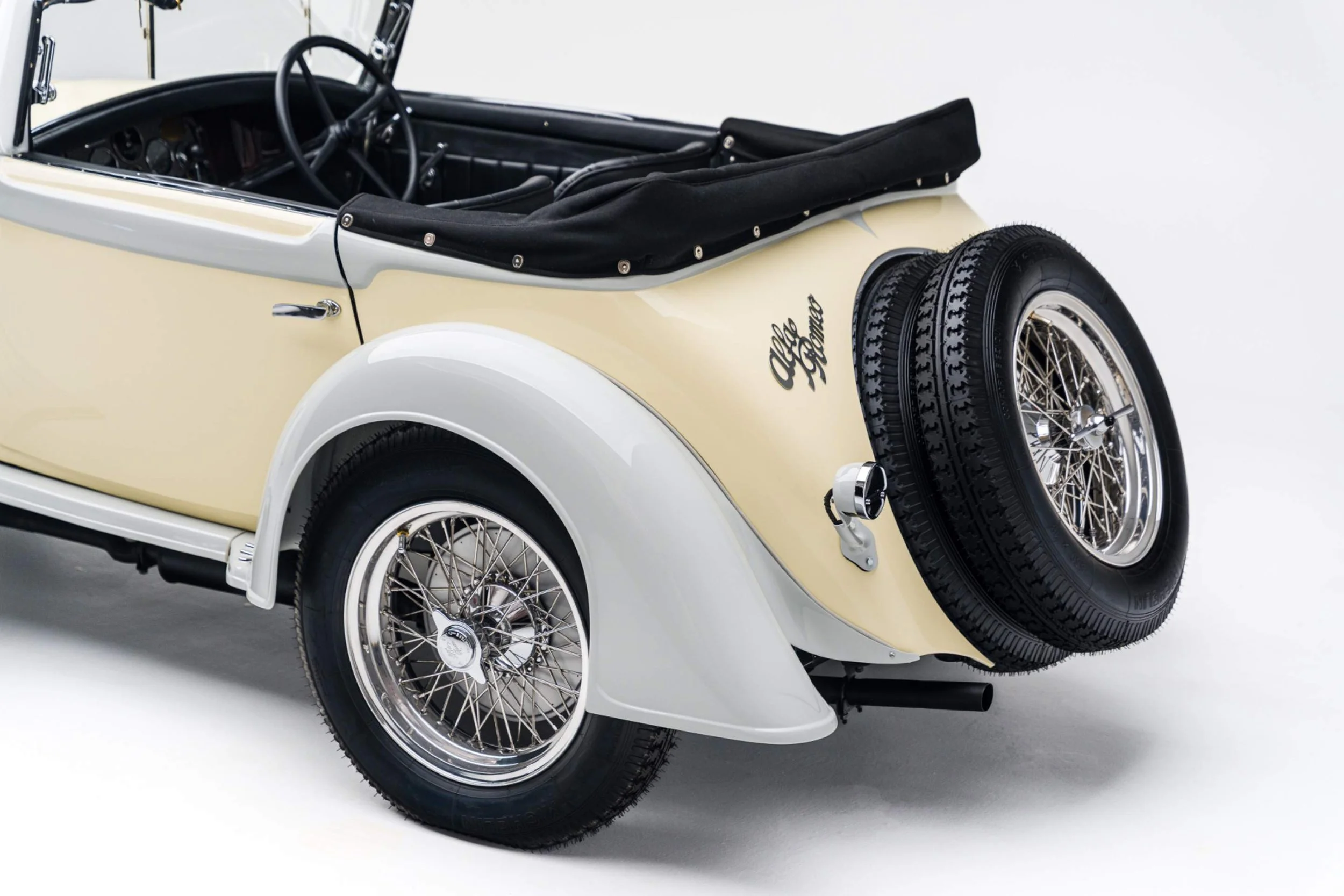
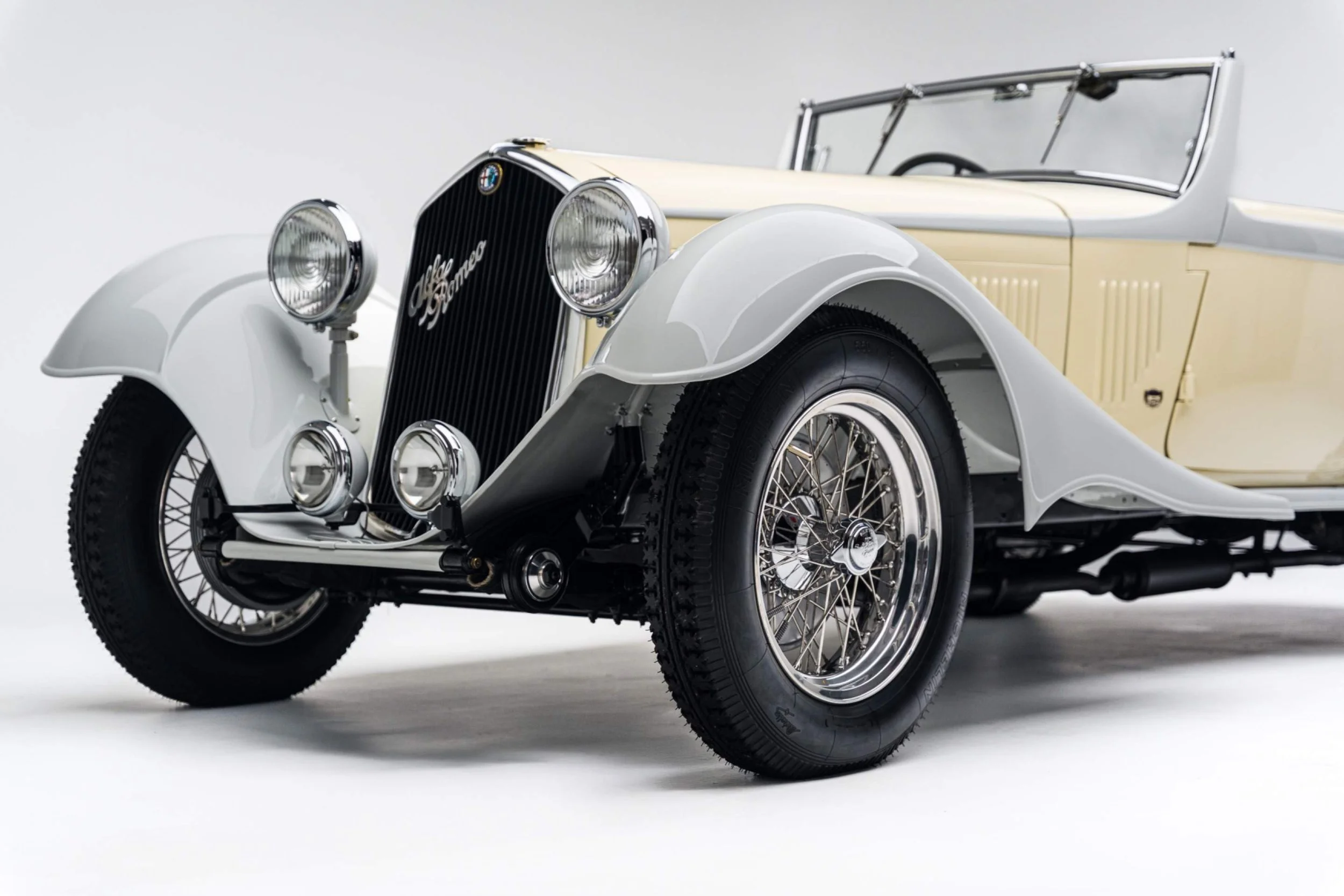
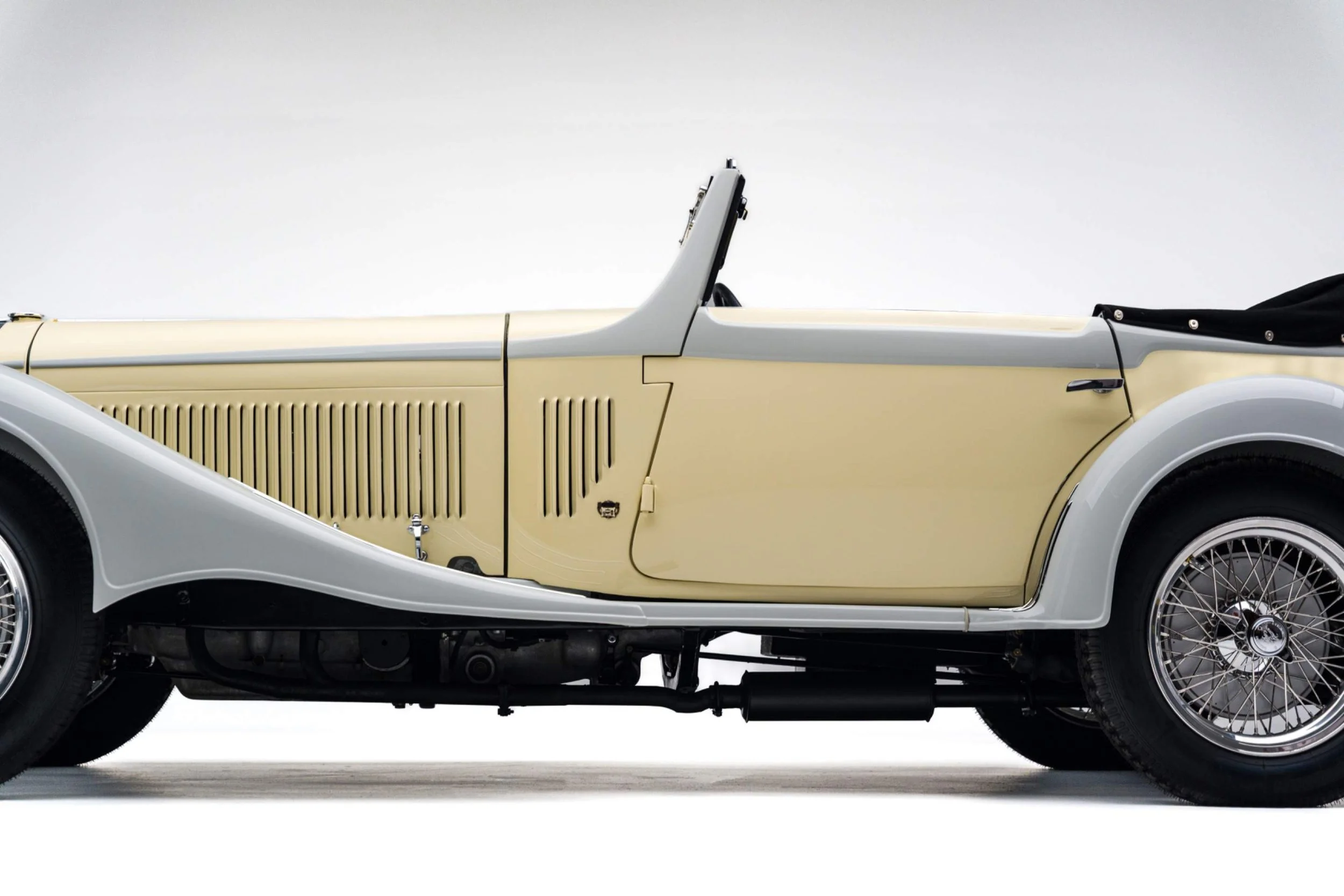
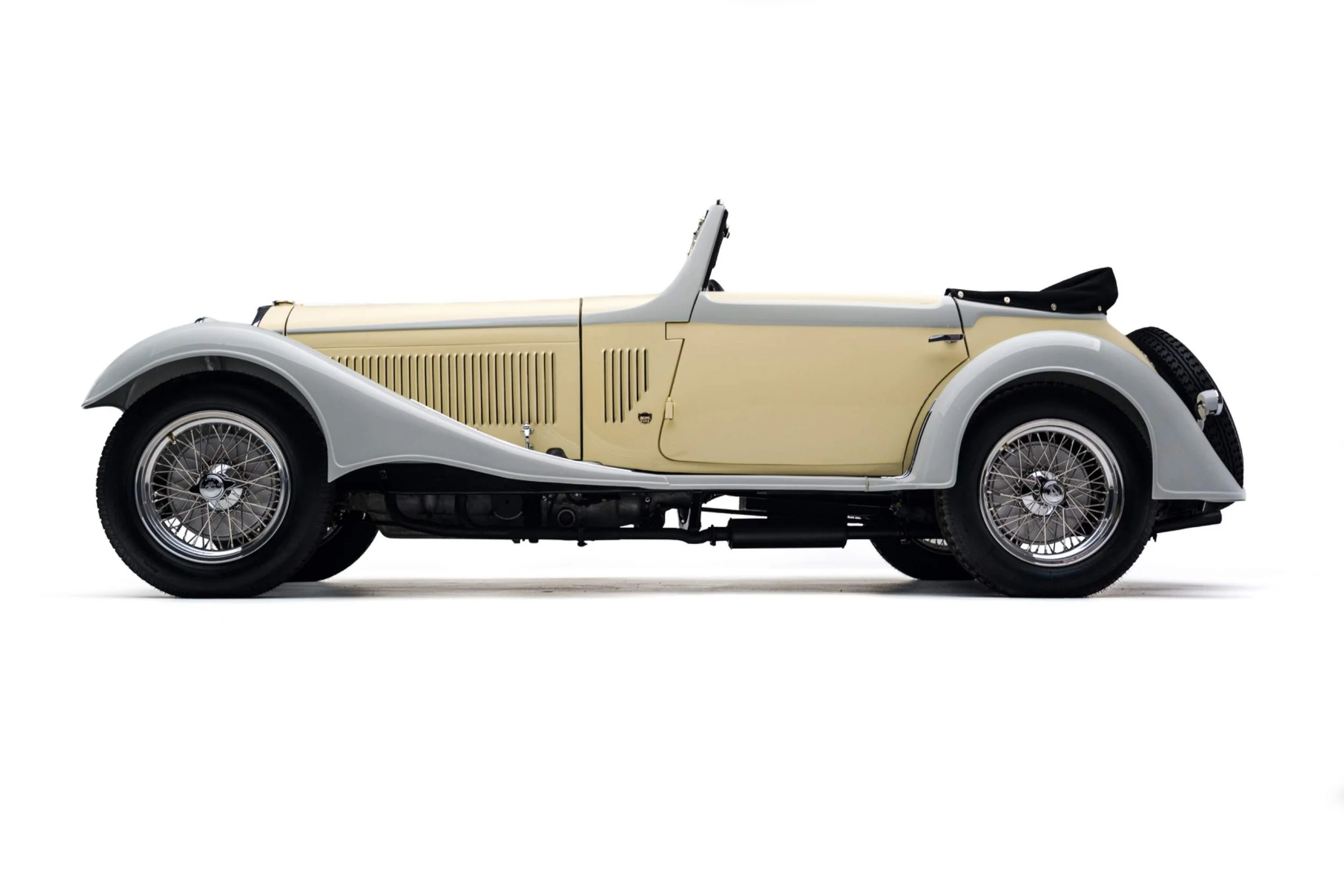
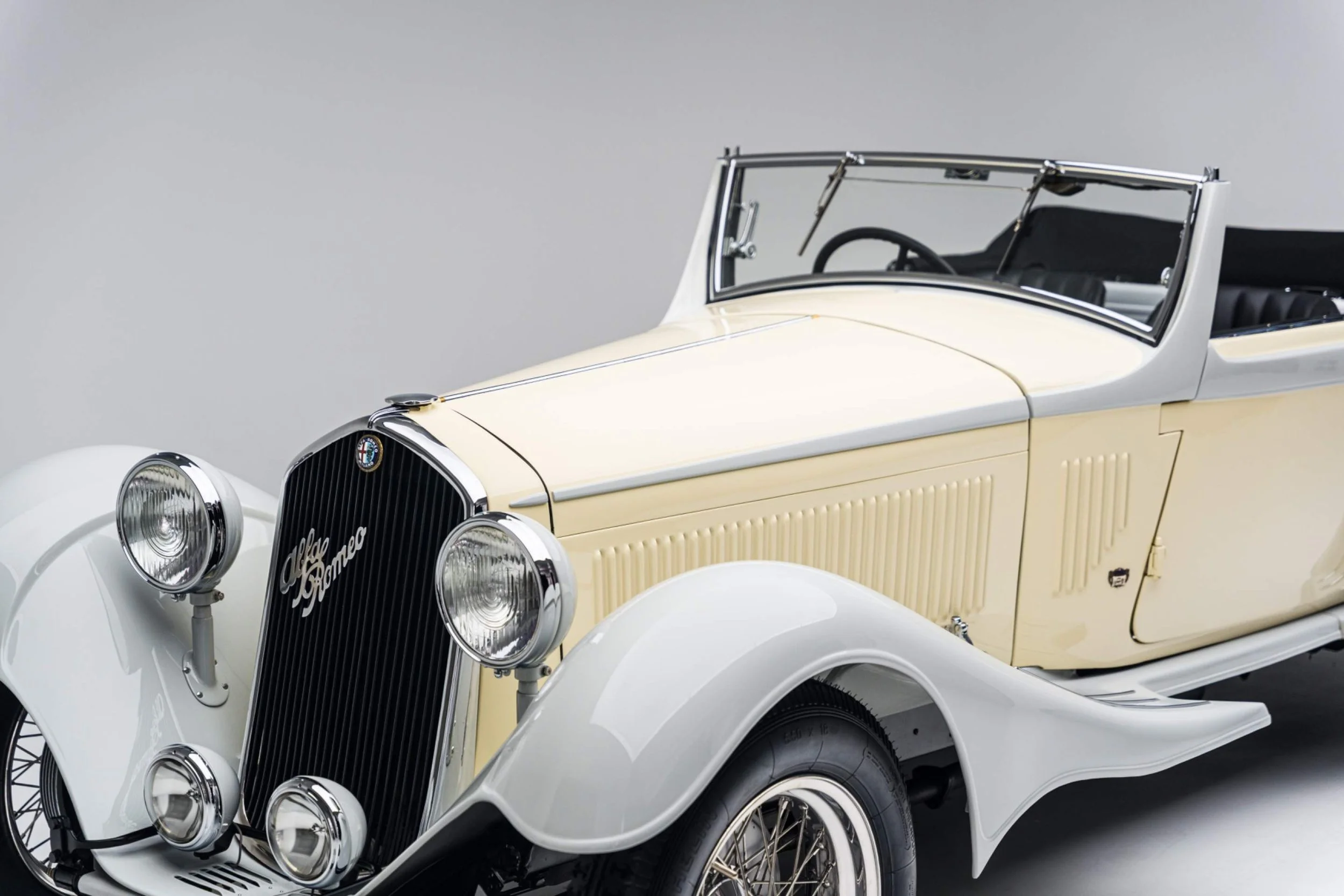
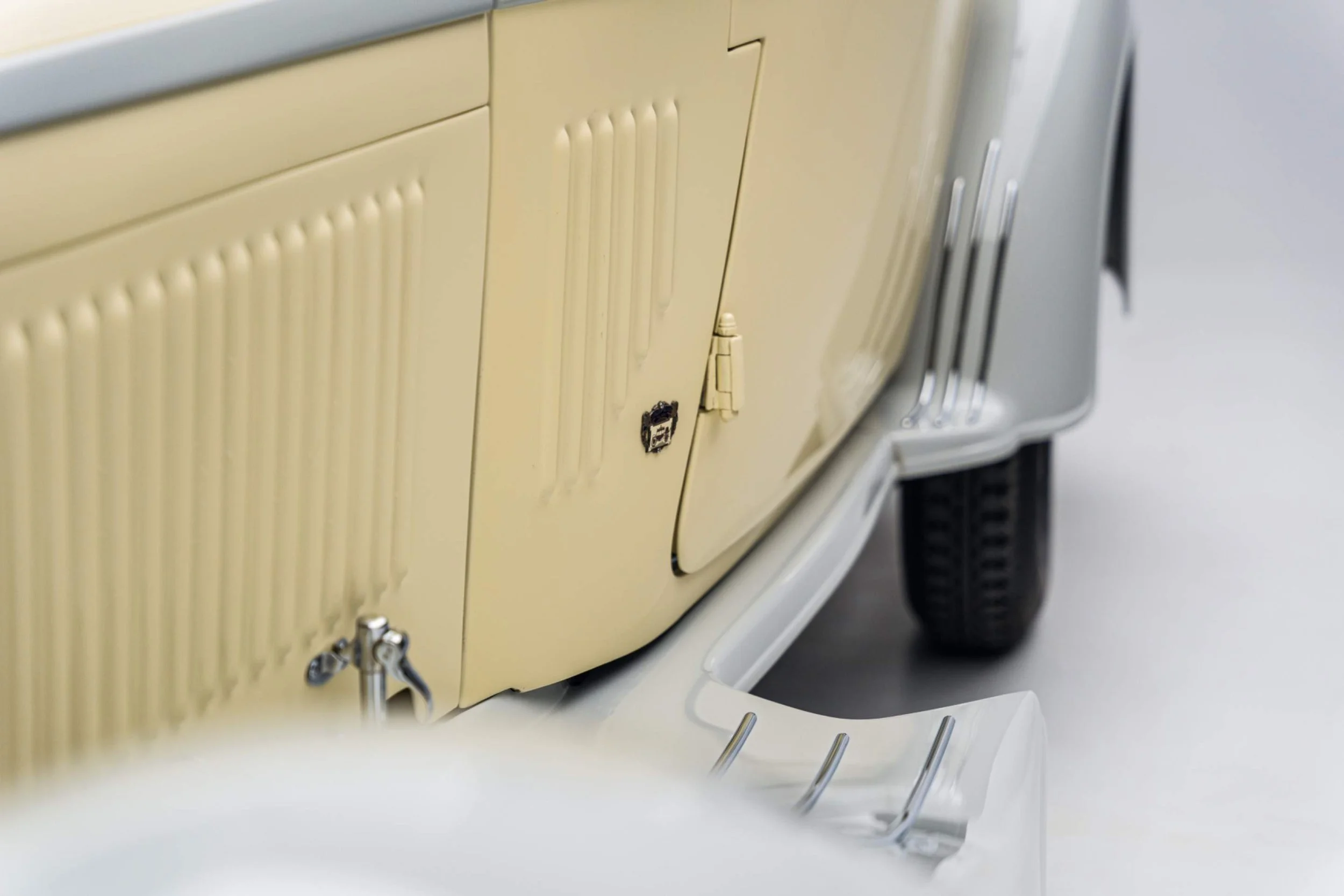
Carrozzeria Castagna, in business since 1849 and the favored coachbuilder of Isotta Fraschini and the Milanese aristocracy, was foremost among them, and Emilio Castagna's close-coupled cabriolets on the six- and eight-cylinder Alfas are the most desirable of its sporting work. Chassis 121215037 is one of the few on the 1750 Gran Sport: a two-door cabriolet with full-length louvers along hood and cowl, a folding top with its own cover, twin spares carried upright on the tail, chrome-plated center-lock wire wheels and a pair of auxiliary lamps ahead of the radiator.
Delivered new to England, the Alfa was registered BLN 167 in November 1934 to Norman Cooper of St James's, passed through the hands of the Brooklands racer and dealer J.H. Bartlett, and in May 1940 was acquired by Rowland Cyril Kyrle Money — Major R.C.K. Money, Royal Engineers, an MG competitor at Donington and Brighton — who kept it for 27 years. Period photographs show it in two-tone paint beside a 1926 Bentley 3 Litre, loaded with spare tires for a weekend's motoring. Rediscovered as a barn find in 1967, it went to Dr Peter Burgess, who began its restoration and took it with him to Australia in 1975, where it was the featured car on the Alfa Romeo stand at the Sydney Motor Show in 1978 and 1979.
In 1984 the Alfa was bought by Diana Gaze — widow of Lex Davison, four-time winner of the Australian Grand Prix, wife of Tony Gaze, Australia's first World Championship driver, and one of the first women to race in the country. Restored by The Automobilists of Melbourne with a freshly rebuilt engine, it was campaigned in the Targa Tasmania in 1992, 1993 and 1996, placing third in class on its first outing. Sold at Sydney's Darling Harbour Classic auction in 1997, the car spent a decade as the centerpiece of Alberto Pamos's Ville de France collection in Brazil before Bonhams sold it at Gstaad in December 2008 to Wim Deys of the Netherlands, who returned it to its original black-and-cream livery with a cosmetic restoration by Carrozzeria Touring in Milan in 2010 and showed it at the Schloss Bensberg Classic. It has been in an American collection since 2016.
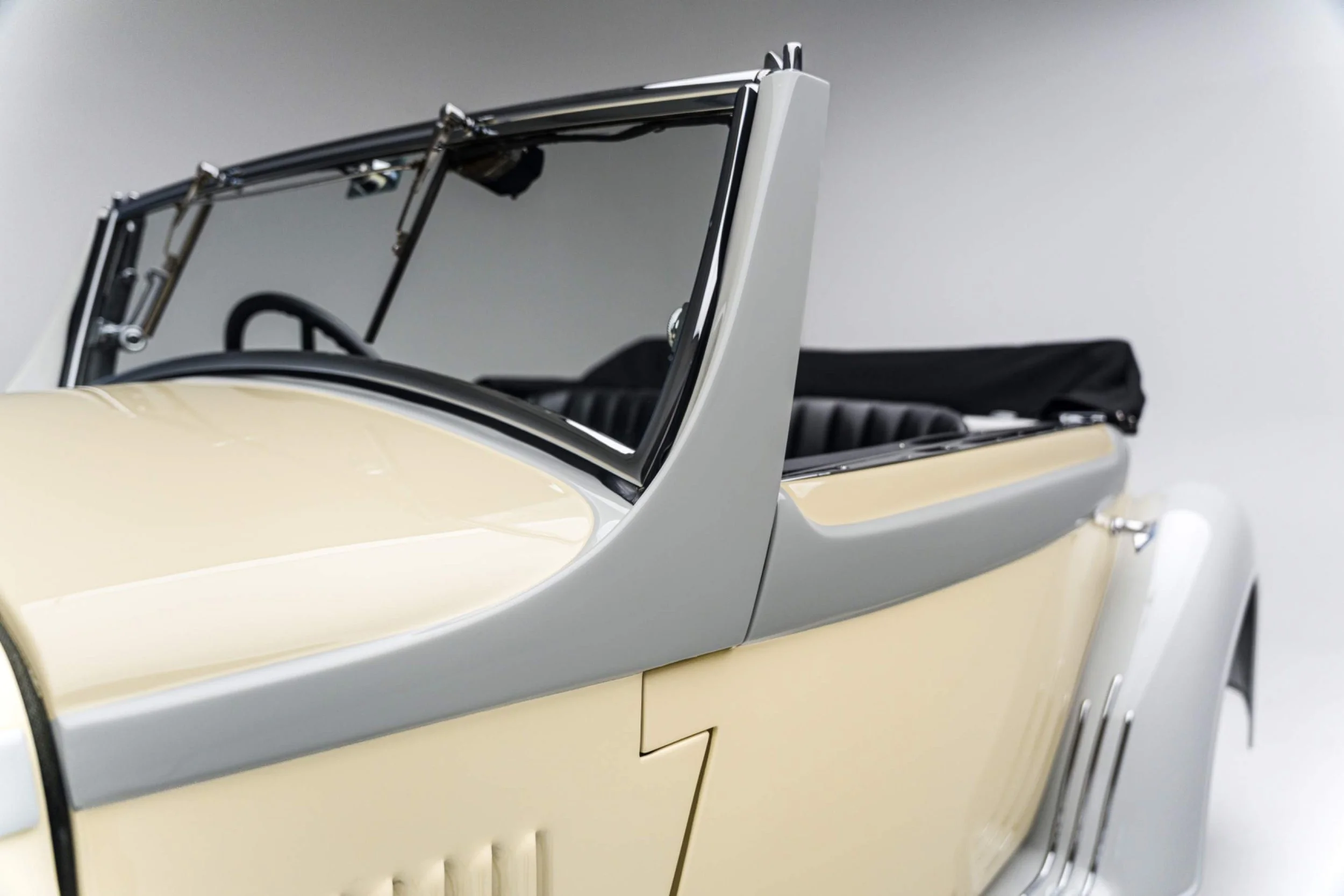
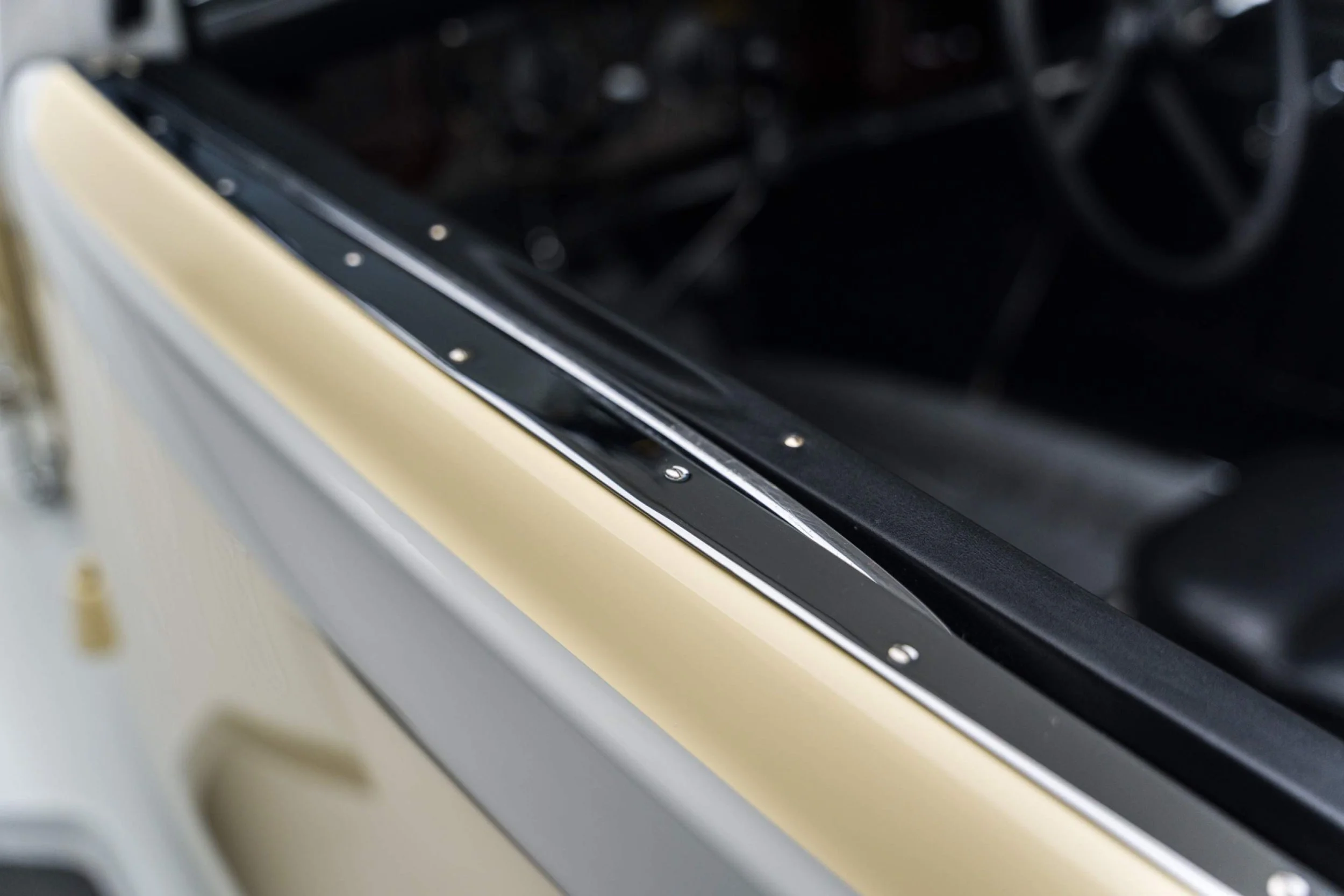
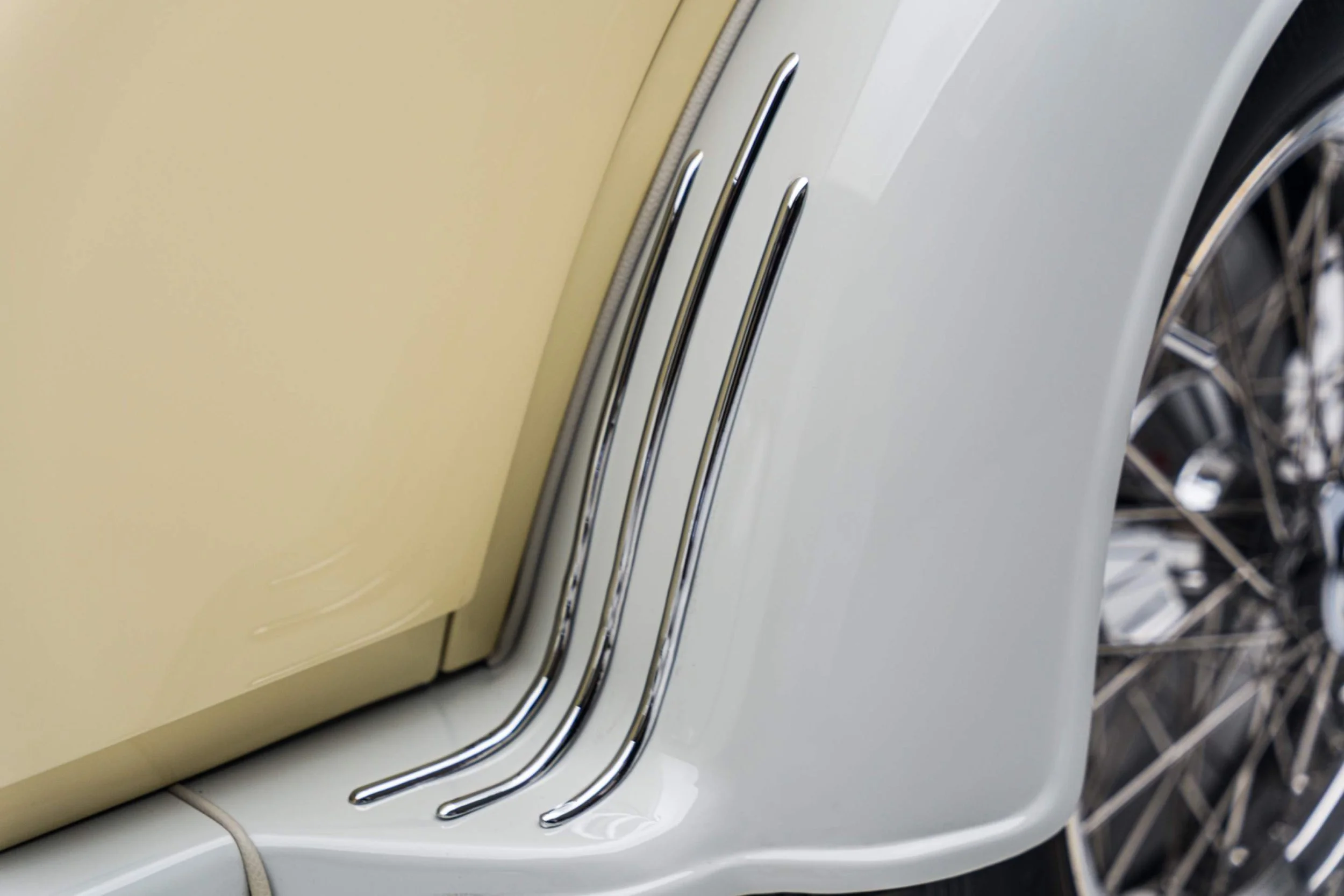
In 2025 the car was cosmetically restored by CCI of Bangor, Pennsylvania, with a full repaint in cream and pale grey, new carpets and a set of flowing fenders fitted in place of the Castagna originals. The original fenders were removed intact and accompany the car, so the next owner has both presentations at hand: the 1933 Castagna drophead and the sharper sporting profile it wears today. For an owner who intends to pursue a FIVA Identity Card and entry to the Registro 1000 Miglia, the altered moulding at the base of the windshield posts would need to return to Castagna's original profile.
Accompanied by a chain of ownership documented back to 1934,, chassis 121215037 is a sixth-series Gran Sport with the engine it was built with and a body that makes four days on Italian roads a pleasure rather than a penance. It offers everything that makes the Zagato-bodied Gran Sports so coveted — the supercharged Jano six, the short chassis, the Mille Miglia pedigree — at a friendlier price point , and with a Castagna cabriolet body built for comfort rather than for saving weight, it is the 1750 to drive, to Brescia or anywhere else.